Shaping order
out of chaos
Reyoco
Reyoco
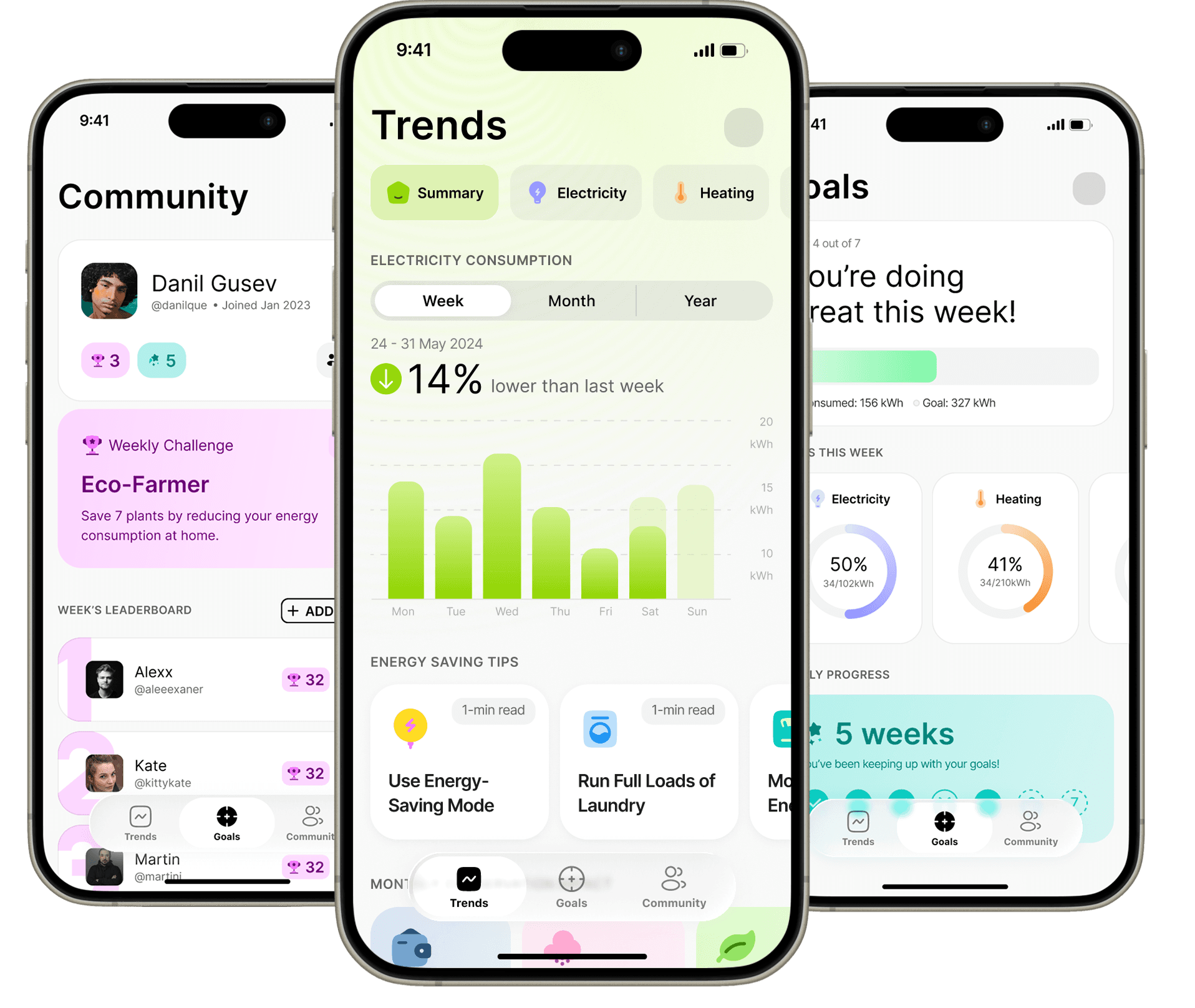
Reyoco is a concept for a mobile app that helps people actively manage and reduce their home energy consumption.
As part of my master’s thesis at Bauhaus-Universität Weimar, this project investigates how user engagement strategies, including goal setting, social comparison, and gamification, can transform passive energy tracking into an interactive and motivating experience.
The outcome is a user-centered solution that encourages behavioral change by making energy use more visible, understandable, and actionable.
Reyoco is a concept for a mobile app that helps people actively manage and reduce their home energy consumption.
As part of my master’s thesis at Bauhaus-Universität Weimar, this project investigates how user engagement strategies, including goal setting, social comparison, and gamification, can transform passive energy tracking into an interactive and motivating experience.
The outcome is a user-centered solution that encourages behavioral change by making energy use more visible, understandable, and actionable.
Contribution
Contribution
User Research
User Research
UX/UI Design
UX/UI Design
Usability Testing
Usability Testing
Design Evaluation
Design Evaluation
Year
Year
2025
2025
Context
Context
Problem
Traditional home energy management systems fail to keep users engaged.
Problem
Traditional home energy management systems fail to keep users engaged.
Goal
Create an intuitive and engaging energy management experience.
Goal
Create an intuitive and engaging energy management experience.
Approach
Domain & Research Review
Analyzed existing Home Energy Management Systems and user engagement strategies to identify limitations and opportunities for improvement.
Domain & Research Review
Analyzed existing Home Energy Management Systems and user engagement strategies to identify limitations and opportunities for improvement.
User Study
Conducted a quantitative study to understand user behaviors, needs, and preferences related to energy consumption, feedback formats, and interaction styles.
User Study
Conducted a quantitative study to understand user behaviors, needs, and preferences related to energy consumption, feedback formats, and interaction styles.
Insight Synthesis & Concept Development
Translated research into actionable insights and explored solution directions, shaping a mobile app concept that combines engagement strategies into a cohesive user experience.
Insight Synthesis & Concept Development
Translated research into actionable insights and explored solution directions, shaping a mobile app concept that combines engagement strategies into a cohesive user experience.
Design & Prototyping
Developed user flows, information architecture, and interactive prototypes to bring the concept to life.
Design & Prototyping
Developed user flows, information architecture, and interactive prototypes to bring the concept to life.
Evaluation & Iteration
Tested the prototype with users, gathering feedback to refine interactions, improve clarity, and enhance overall usability.
Evaluation & Iteration
Tested the prototype with users, gathering feedback to refine interactions, improve clarity, and enhance overall usability.
Research Insights
Research Insights
Energy data alone doesn’t drive behaviour
Most systems focus on monitoring and automation, assuming that access to data will naturally lead to better decisions. In reality, raw energy data is often too abstract and fails to motivate action.
Energy data alone doesn’t drive behaviour
Most systems focus on monitoring and automation, assuming that access to data will naturally lead to better decisions. In reality, raw energy data is often too abstract and fails to motivate action.
Engagement drops quickly without interaction
Static dashboards and passive feedback lead to short-term curiosity but fail to sustain long-term use. Users disengage when there is no ongoing interaction or sense of progress.
Engagement drops quickly without interaction
Static dashboards and passive feedback lead to short-term curiosity but fail to sustain long-term use. Users disengage when there is no ongoing interaction or sense of progress.
Single engagement strategies are not enough
Existing solutions often rely on isolated features such as gamification or goal-setting. Research shows that these approaches are significantly more effective when combined.
Single engagement strategies are not enough
Existing solutions often rely on isolated features such as gamification or goal-setting. Research shows that these approaches are significantly more effective when combined.
Long-term engagement requires variability
Repetitive interfaces and static feedback lead to fatigue over time. Users are more likely to stay engaged when the experience evolves and offers different types of interaction.
Long-term engagement requires variability
Repetitive interfaces and static feedback lead to fatigue over time. Users are more likely to stay engaged when the experience evolves and offers different types of interaction.
Users need context, not just consumption
Users struggle to understand what their energy usage means without context—such as comparisons, benchmarks, or monetary impact.
Users need context, not just consumption
Users struggle to understand what their energy usage means without context—such as comparisons, benchmarks, or monetary impact.
Design Principles
Design Principles
Make energy consumption visible over time
Users need to understand how their energy usage evolves rather than rely on isolated data points. The system enables tracking and comparison across different timeframes to support reflection and better decision-making.
Make energy consumption visible over time
Users need to understand how their energy usage evolves rather than rely on isolated data points. The system enables tracking and comparison across different timeframes to support reflection and better decision-making.
Support flexible goal-setting without pressure
Users are more motivated when they can set realistic goals without fear of failure. The system allows users to define goals, track progress, and receive rewards while avoiding penalties for occasional setbacks.
Support flexible goal-setting without pressure
Users are more motivated when they can set realistic goals without fear of failure. The system allows users to define goals, track progress, and receive rewards while avoiding penalties for occasional setbacks.
Turn energy saving into an engaging experience
Energy management should feel active rather than passive. The system introduces challenges, recurring tasks, and rewards to create a more engaging and sustainable interaction over time.
Turn energy saving into an engaging experience
Energy management should feel active rather than passive. The system introduces challenges, recurring tasks, and rewards to create a more engaging and sustainable interaction over time.
Use social comparison carefully to motivate users
Comparing progress with others can increase motivation but must be handled sensitively. The system supports social interaction and comparison while protecting privacy through anonymised or relative data.
Use social comparison carefully to motivate users
Comparing progress with others can increase motivation but must be handled sensitively. The system supports social interaction and comparison while protecting privacy through anonymised or relative data.
Show the real impact of user actions
Users are more engaged when they understand the outcomes of their behaviour. The system highlights financial and environmental impact to make energy-saving efforts more meaningful.
Show the real impact of user actions
Users are more engaged when they understand the outcomes of their behaviour. The system highlights financial and environmental impact to make energy-saving efforts more meaningful.
Simplify data through intuitive visualisation
Energy data must be easy to understand at a glance. The system uses clear visualisations and relatable metrics, such as costs or percentages, supporting abstract technical units.
Simplify data through intuitive visualisation
Energy data must be easy to understand at a glance. The system uses clear visualisations and relatable metrics, such as costs or percentages, supporting abstract technical units.
Provide timely and relevant feedback
Engagement depends on timely and contextual interaction. The system delivers notifications for consumption changes, goal progress, and achievements while avoiding overload through careful prioritisation.
Provide timely and relevant feedback
Engagement depends on timely and contextual interaction. The system delivers notifications for consumption changes, goal progress, and achievements while avoiding overload through careful prioritisation.
Make the system accessible in everyday contexts
Energy management should integrate naturally into daily life. The system is designed as a mobile app, allowing users to access information and receive recommendations anytime and anywhere.
Make the system accessible in everyday contexts
Energy management should integrate naturally into daily life. The system is designed as a mobile app, allowing users to access information and receive recommendations anytime and anywhere.
User Flows
User Flows
To define how the app works, I translated user requirements into a set of core user flows, each representing a key user goal within the system. In total, 5 primary flows were defined, supported by additional flows for onboarding and contextual interactions.
To define how the app works, I translated user requirements into a set of core user flows, each representing a key user goal within the system. In total, 5 primary flows were defined, supported by additional flows for onboarding and contextual interactions.
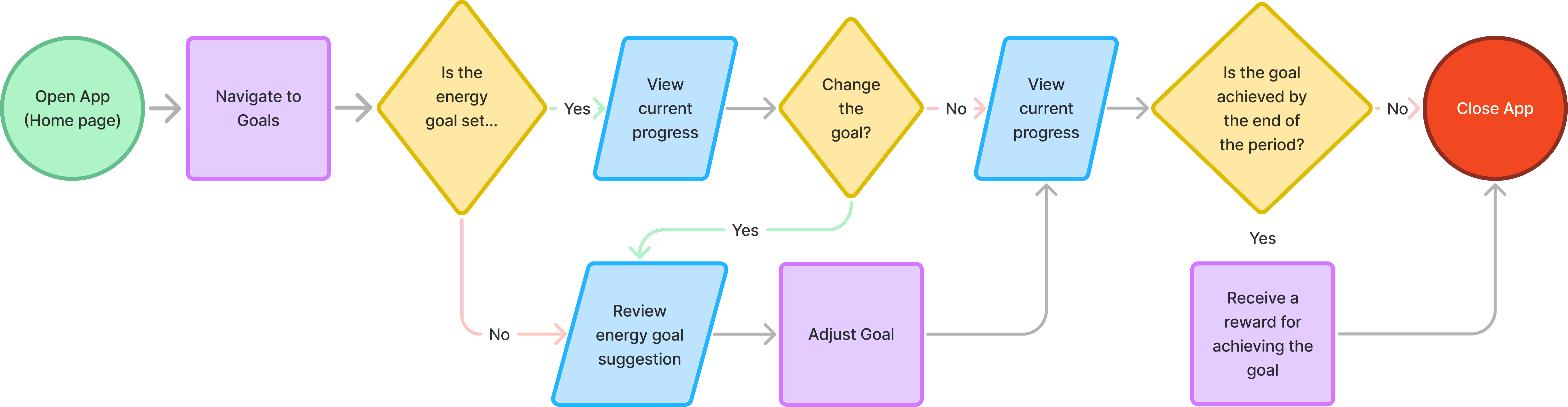
Reyoco / User Flow 2: Setting and Tracking Energy Goals
Monitoring energy consumption
This flow allows users to track their energy usage over time and compare trends across categories such as electricity, gas, and heating. It forms the foundation of the app by helping users understand their current consumption and identify patterns.
Monitoring energy consumption
This flow allows users to track their energy usage over time and compare trends across categories such as electricity, gas, and heating. It forms the foundation of the app by helping users understand their current consumption and identify patterns.
Setting and tracking goals
Users can define personal energy-saving goals, follow their progress, and receive feedback on achievements. This flow introduces direction and turns passive monitoring into goal-oriented behaviour.
Setting and tracking goals
Users can define personal energy-saving goals, follow their progress, and receive feedback on achievements. This flow introduces direction and turns passive monitoring into goal-oriented behaviour.
Participating in challenges
This flow enables users to engage in recurring tasks and challenges designed to encourage energy-saving actions. It builds on the goal-setting system by introducing short-term, actionable activities.
Participating in challenges
This flow enables users to engage in recurring tasks and challenges designed to encourage energy-saving actions. It builds on the goal-setting system by introducing short-term, actionable activities.
Comparing progress socially
Users can view their progress relative to others and interact through lightweight social features such as recognition and feedback. This flow adds a social layer to the experience, supporting motivation through comparison and community.
Comparing progress socially
Users can view their progress relative to others and interact through lightweight social features such as recognition and feedback. This flow adds a social layer to the experience, supporting motivation through comparison and community.
Understanding energy impact
This flow focuses on presenting the outcomes of user actions, such as financial savings and environmental impact. It reinforces motivation by connecting behaviour to tangible results.
Understanding energy impact
This flow focuses on presenting the outcomes of user actions, such as financial savings and environmental impact. It reinforces motivation by connecting behaviour to tangible results.
Information Architecture
Information Architecture
Once the core user flows were defined, the next step was to organise them into a clear and cohesive structure that brings multiple engagement strategies together into a single system.
Once the core user flows were defined, the next step was to organise them into a clear and cohesive structure that brings multiple engagement strategies together into a single system.
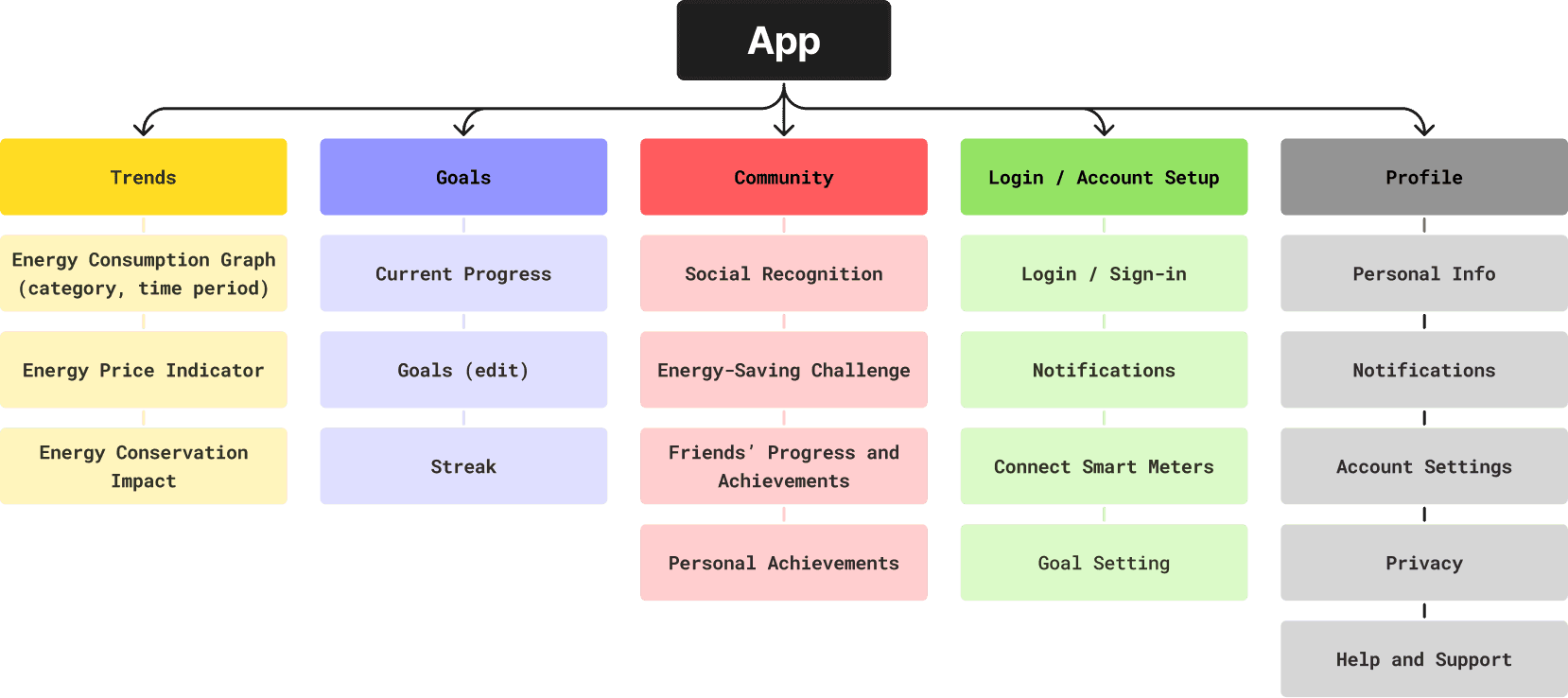
Reyoco / Information Architecture
Grouping features by engagement strategy
Features were organised into distinct sections based on key engagement strategies, including monitoring, goal-setting, challenges, and social interaction. Some strategies were combined in the same space—for example, monitoring and understanding the impact on savings—while others were kept separate to preserve clarity and focus.
Grouping features by engagement strategy
Features were organised into distinct sections based on key engagement strategies, including monitoring, goal-setting, challenges, and social interaction. Some strategies were combined in the same space—for example, monitoring and understanding the impact on savings—while others were kept separate to preserve clarity and focus.
Separating primary and secondary interactions
Primary actions such as tracking consumption, setting goals, and participating in challenges were prioritised within the main navigation. Supporting interactions—such as onboarding, profile management, and system feedback—were placed in secondary layers to keep the interface focused and reduce complexity.
Separating primary and secondary interactions
Primary actions such as tracking consumption, setting goals, and participating in challenges were prioritised within the main navigation. Supporting interactions—such as onboarding, profile management, and system feedback—were placed in secondary layers to keep the interface focused and reduce complexity.
Design Solutions
Design Solutions
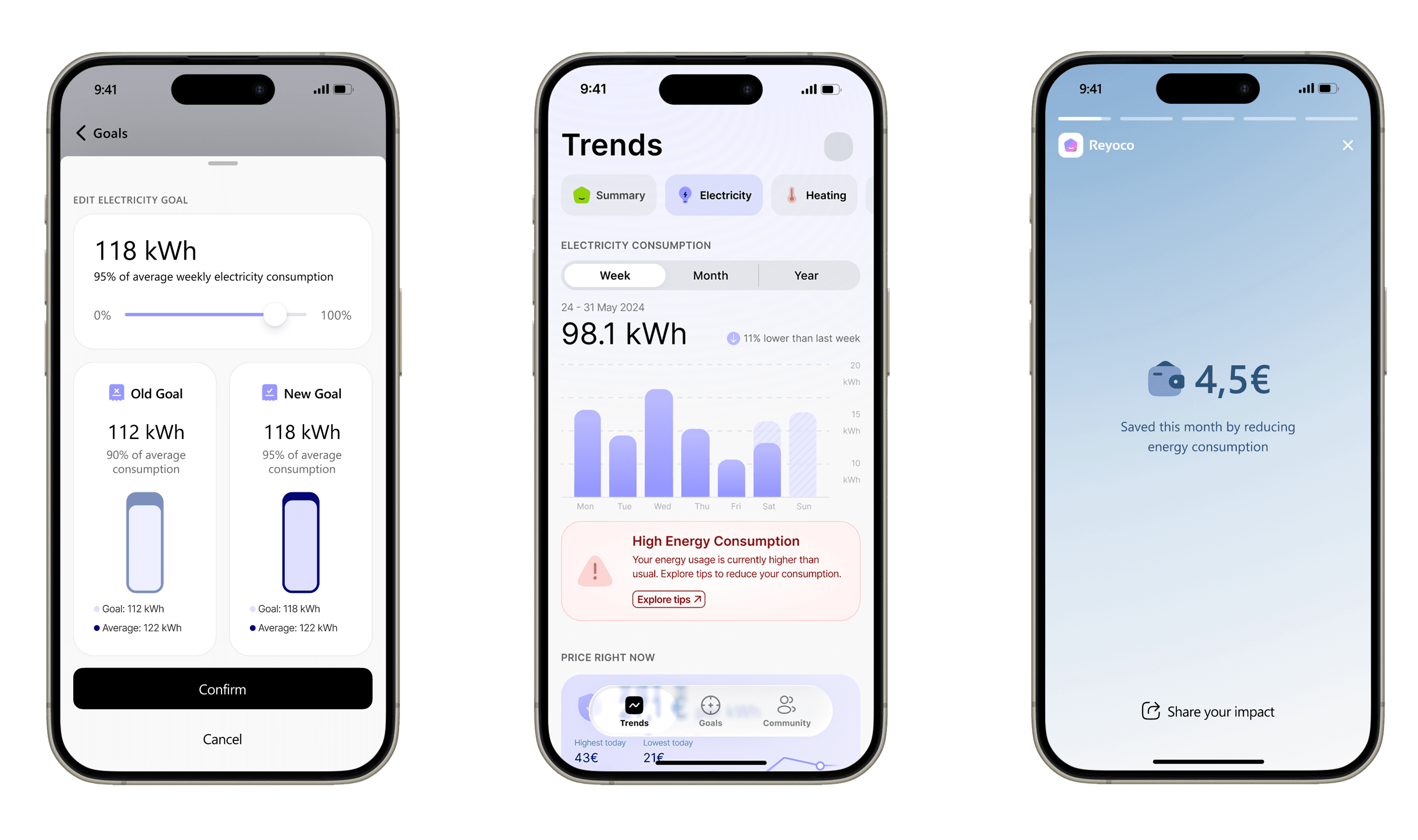
Reyoco / Setting goals, monitoring consumption, viewing impact
Energy Overview
The home screen provides a clear overview of energy consumption, combining visual trends with key metrics to make data easy to understand. Users can quickly identify patterns, compare usage over time, and access relevant actions such as setting goals or exploring challenges.
Energy Overview
The home screen provides a clear overview of energy consumption, combining visual trends with key metrics to make data easy to understand. Users can quickly identify patterns, compare usage over time, and access relevant actions such as setting goals or exploring challenges.
Challenges & Community
Users can participate in energy-saving challenges and compare their progress with others. Social features such as recognition and feedback introduce a sense of accountability and motivation while maintaining privacy through relative comparisons.
Challenges & Community
Users can participate in energy-saving challenges and compare their progress with others. Social features such as recognition and feedback introduce a sense of accountability and motivation while maintaining privacy through relative comparisons.
Goals & Progress
This section allows users to set and track personal energy-saving goals. Progress is visualised through clear indicators and milestones, helping users stay motivated while maintaining flexibility to adapt goals over time.
Goals & Progress
This section allows users to set and track personal energy-saving goals. Progress is visualised through clear indicators and milestones, helping users stay motivated while maintaining flexibility to adapt goals over time.
Impact Overview
At the end of each period, the system aggregates user activity and translates it into clear outcomes, such as financial savings and environmental impact. This feature provides a moment of reflection, reinforcing progress and motivating continued engagement.
Impact Overview
At the end of each period, the system aggregates user activity and translates it into clear outcomes, such as financial savings and environmental impact. This feature provides a moment of reflection, reinforcing progress and motivating continued engagement.
Prototype Testing
Prototype Testing
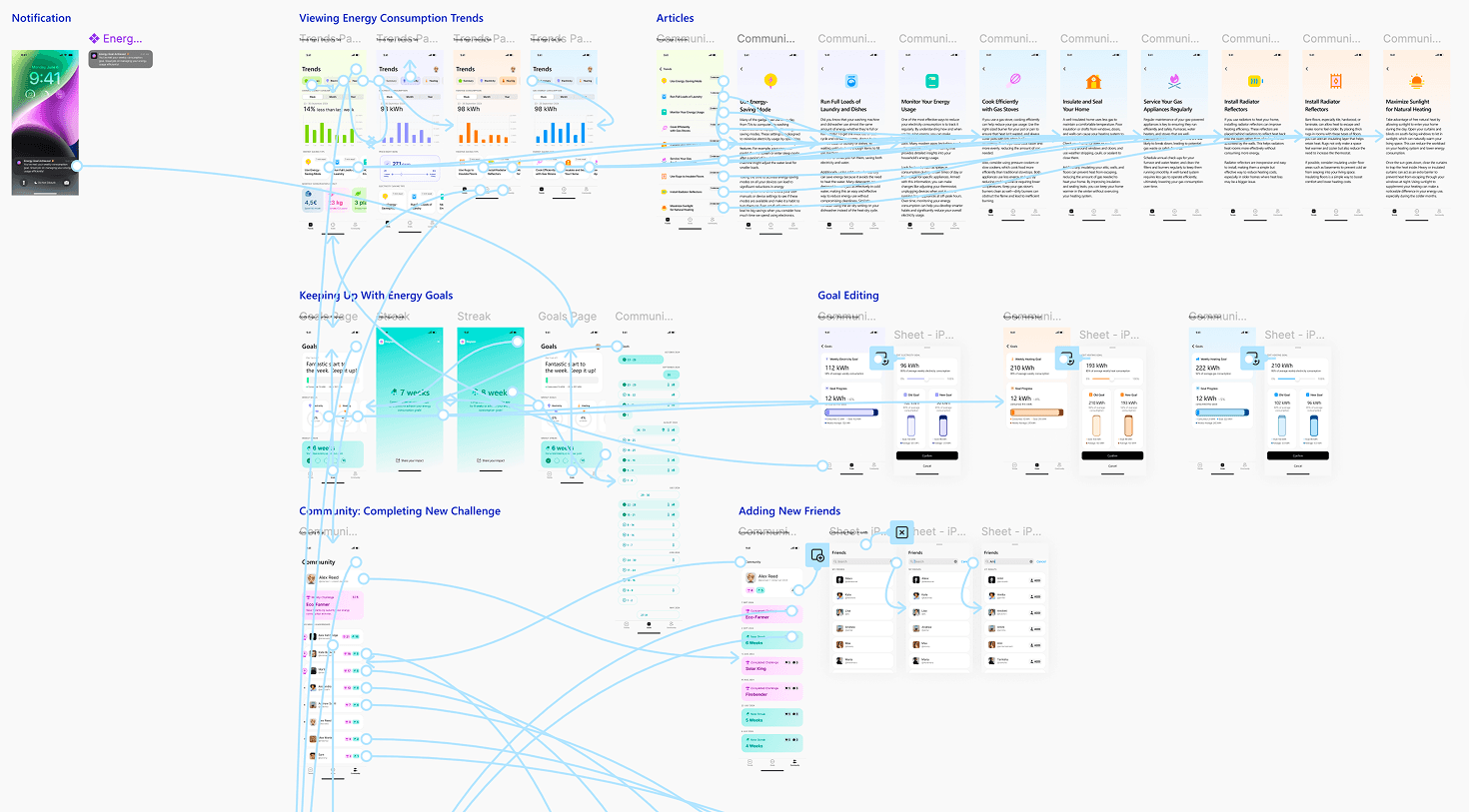
Reyoco / Prototype
Core flows were intuitive, but navigation needed clarity
Users were generally able to complete key tasks such as tracking consumption, setting goals, and participating in challenges. However, some sections required clearer entry points and structure.
Core flows were intuitive, but navigation needed clarity
Users were generally able to complete key tasks such as tracking consumption, setting goals, and participating in challenges. However, some sections required clearer entry points and structure.
Goal-setting required clearer communication
While users understood the concept of setting energy goals, some terminology and interaction patterns were unclear. This led to refinements in how goals are presented, adjusted, and confirmed.
Goal-setting required clearer communication
While users understood the concept of setting energy goals, some terminology and interaction patterns were unclear. This led to refinements in how goals are presented, adjusted, and confirmed.
Feedback needed to be more visible and actionable
Users expected stronger and more immediate feedback when interacting with the system, especially in cases such as exceeding limits or completing tasks. This resulted in more prominent notifications, clearer progress indicators, and improved feedback logic.
Feedback needed to be more visible and actionable
Users expected stronger and more immediate feedback when interacting with the system, especially in cases such as exceeding limits or completing tasks. This resulted in more prominent notifications, clearer progress indicators, and improved feedback logic.
Users valued comparison and progress tracking
Participants responded positively to features that allowed them to compare consumption and track progress over time. These interactions became central to the experience and were further emphasised in the design.
Users valued comparison and progress tracking
Participants responded positively to features that allowed them to compare consumption and track progress over time. These interactions became central to the experience and were further emphasised in the design.
Additional supporting features improved usability
Testing revealed the need for additional elements such as clearer onboarding, supporting pages, and improved flow transitions. These additions helped make the system more understandable and easier to use in practice.
Additional supporting features improved usability
Testing revealed the need for additional elements such as clearer onboarding, supporting pages, and improved flow transitions. These additions helped make the system more understandable and easier to use in practice.